The Three-Body Problem
by Cixin Liu

https://www.nytimes.com/2014/11/11/books/liu-cixins-the-three-body-problem-is-published-in-us.html
the author
Cixin Liu
- Born in June 1963 and raised in Shanxi, China ("Summary Bibilography: Cixin Liu")
- Worked as a computer engineer at a power plant in Shanxi (Lam; Richardson)
- Began publishing SF in the 1990s (Lam)
context and influence
-
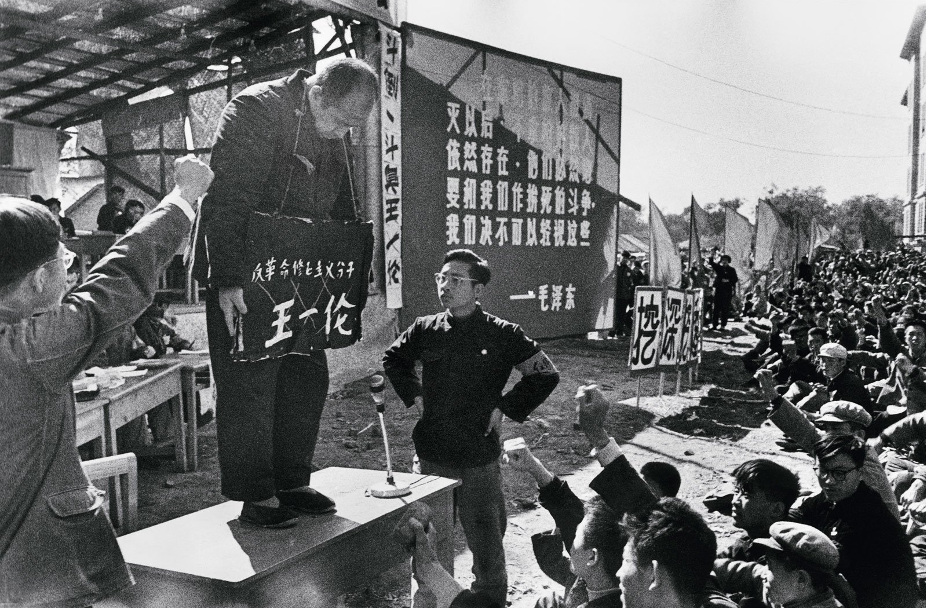
The Cultural Revolution began when Liu was 3 years old ("The Cultural Revolution, 1966–76")
- It continued into his teenage years
- Could have influenced The Three-Body Problem
- His father was sent to work in the coal mines during the Cultural Revolution and he was sent to live with his grandparents (Fan)
- He read Journey to the Center of the Earth by Jules Verne at a young age (Fan)
- Influenced by (Fan)
- Vonnegut, Bradbury, Pynchon, and Orwell
- His experiences during China's economic transformation
https://theobserver-qiaa.org/the-cultural-revolution-has-come-to-the-west
https://www.amazon.ca/Three-Body-Problem-Cixin-Liu/dp/0765382032
the book
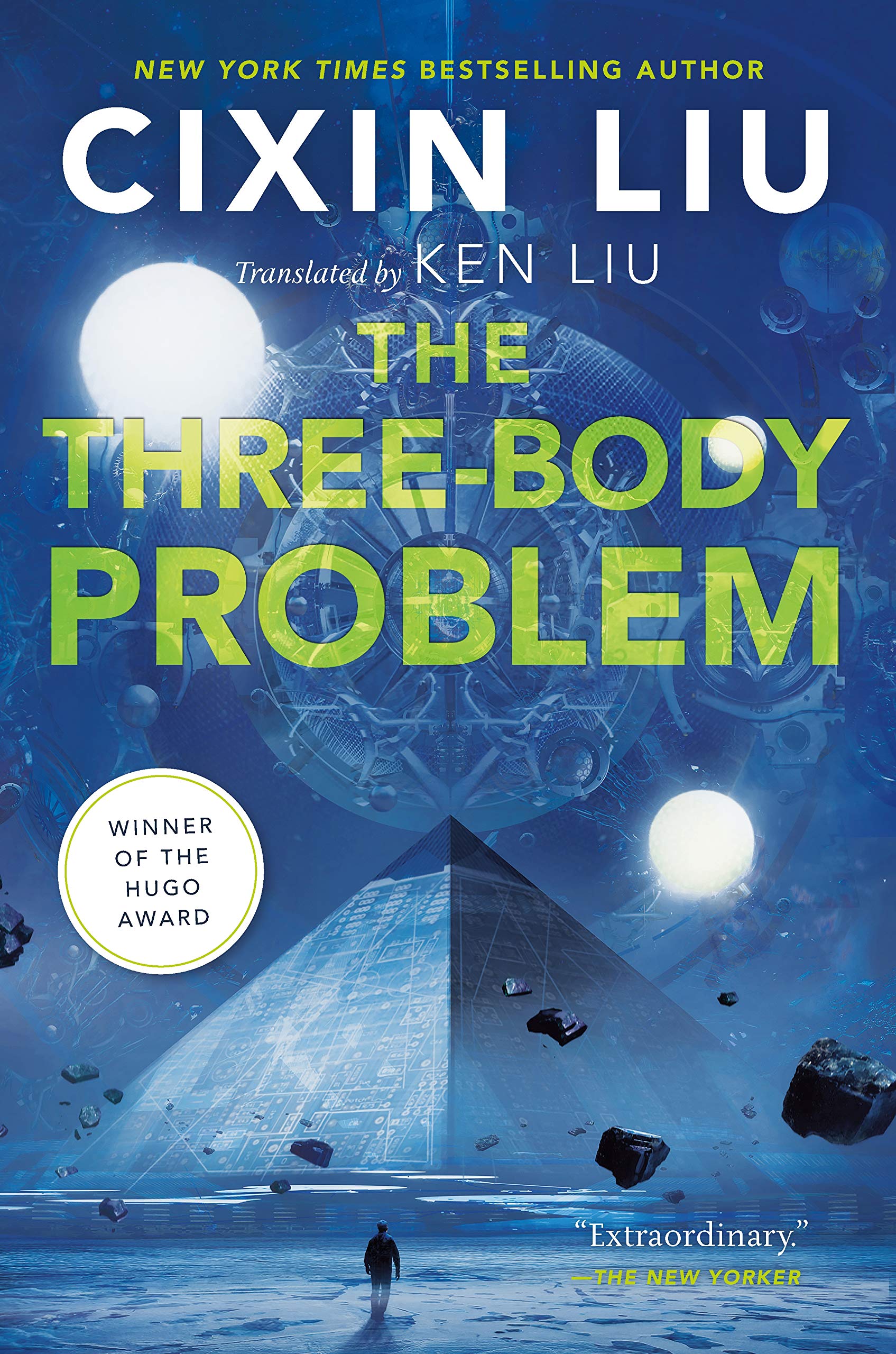
- First available in 2006 (Yeung)
- Won the Galaxy Award in 2006 (Yeung)
- Translated to English in 2014 by Ken Liu (Yeung)
- Won the 2015 Hugo Award for Best Novel ("2015 Hugo Awards")
- Made Liu the first Asian writer to receive a Hugo award (Richardson)
- Praised by Obama (Yeung)
synopsis
- Begins in the Cultural Revolution
- On earth, many feel hopeless about the human race
- A few scientists discovers that they are not alone in the universe
- Another civilization is on the way to Earth from a tri-solar star system
themes
- Coexistence of different intelligent lifeforms
- Is human nature actually the nature of intelligent life?
- Morals of extraterrestrials: better or worse than humans?
- Is survival the motivation for conflict? Is it justified?
what I liked
- science
- technology
- virtual reality
- conflict and warfare
- human nature/the nature of intelligent life
- Named after and involves the three-body problem as a plot device
- Considered hard sci-fi (although sometimes speculative and not accurate)
- Both covers some human history & explains the background of the aliens through a VR game
- Many characters in the guise of historical figures appeared in the game
- King When of Zhou, Qin Shi Huang
- Newton, Copernicus, Galileo
- von Neumann, Einstein
- etc.
- Cultural Revolution is also an effective hook
what I didn't like as much
- Liu's characters aren't very complex (a bit flat)
- There's only one (or maybe a few) relatively deeply developed character
- Writing is more focused on the plot than the characters
philosophy
author's beliefs
- Liu gave his own pessimistic views on extraterrestrial life
- "We should be ever vigilant" (Liu 395)
- "Turn the kindness we show toward the stars to members of the human race" (Liu 392)
- Aliens won't necessarily have higher moral standards than us
what can we take away?
- Conflicts have always been present
- Improvements to be made
- By learning how to coexist with humans, we might learn to coexist with other life
- First contact with extraterrestrials could show us what we're doing wrong as a species
- Our technology needs to be applied for the benefit of the human race as a whole
- Do higher beings have higher moral standards?
- Can be difficult to imagine
- I think it's likely that the answer is no
- If we can't coexist with other species, we should at least coexist with ourselves
thanks for listening!
credits:background image modified from https://www.nasa.gov/image-feature/goddard/2022/hubble-reveals-a-river-of-star-formation/
thanks to the Everforest colourscheme (https://github.com/sainnhe/everforest) for defining my entire aesthetic 🌲🌲🌲🌲🌲
works cited
"2015 Hugo Awards." The Hugo Awards, www.thehugoawards.org/hugo-history/2015-hugo-awards/.
"Publication: The Three-Body Problem." The Internet Speculative Fiction Database, isfdb.org/cgi-bin/pl.cgi?485294.
"Summary Bibliography: Cixin Liu." The Internet Speculative Fiction Database, isfdb.org/cgi-bin/ea.cgi?208409.
"The Cultural Revolution, 1966-76." Encyclopædia Britannica.
Fan, Jiayang. "Liu Cixin's War of the Worlds." The New Yorker, 17 June 2019, www.newyorker.com/
Lam, Adam. "Liu Cixin (刘慈欣)." The Palgrave Encyclopedia of Urban Literary Studies, https://doi.org/10.1007/978-3-319-62592-8_238-1.
Liu, Cixin. The Three-Body Problem. Translated by Ken Liu, Tor Books, 2014.
Manthorpe, Rowland. "Cixin Liu Is the Author of Your Next Favourite Sci-Fi Novel." Wired UK, Condé Nast, 29 Oct. 2016, www.wired.co.uk/article/chinese-sci-fi-writer-cixin-liu.
Richardson, Nick. "Even What Doesn't Happen Is Epic." London Review of Books, 8 Feb. 2018, www.lrb.co.uk/the-paper/v40/n03/nick-richardson/even-what-doesn-t-happen-is-epic.
Yeung, Jessie. "Game of Thrones Producers to Adapt Chinese Sci-fi 'The Three-Body Problem' for Netflix." CNN Style, Cable News Network, 1 Sept. 2020, edition.cnn.com/style/article/netflix-three-body-problem-adaptation-intl-hnk-scli/index.html.